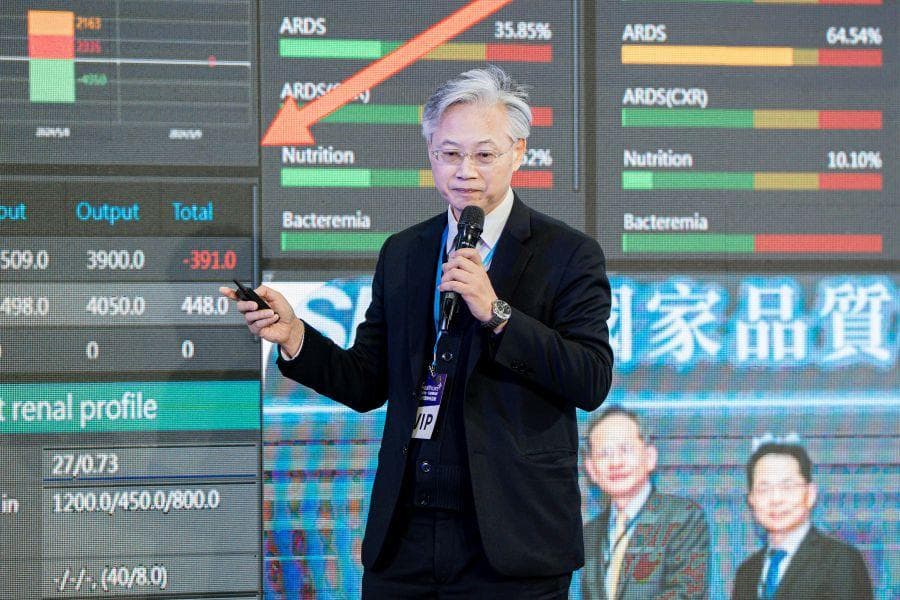
From Singapore to Tokyo to Taichung, a frontline of smart healthcare is taking shape. Three flagship institutions — Singapore General Hospital (SGH), The University of Tokyo Hospital, and Taichung Veterans General Hospital (TCVGH) — are using AI, robotics, and precision medicine to reconceptualize what a hospital can achieve, each with important areas of focus.
The world is taking notice. All three were recognized in Newsweek’s World’s Best Hospitals rankings. In the latest 2026 list, SGH placed 10th and The University of Tokyo Hospital 13th globally, while TCVGH ranked among the top three hospitals in Taiwan. TCVGH has also been named Taiwan’s No. 1 Smart Hospital for four consecutive years and is listed at No. 85 on Newsweek’s World’s Best Smart Hospitals 2026.
At the recent Asia-Pacific Healthcare Quality Forum, SGH, The University of Tokyo Hospital, and TCVGH highlighted shared approaches that use AI to redistribute clinical workloads, improve patient care, and expand capacity for local communities, medical education, and training beyond their regions.
SGH Turns to Automation, Slashing Tens of Thousands of Hours of Manual Work
By deploying Robotic Process Automation (RPA) in its operations, SGH has eliminated tens of thousands of hours of manual work. The result: more than 84,000 hours returned to staff and S$3 million in productivity gains — a clear signal of how automation can scale efficiency and support care.
In clinical practice, SGH developed its own AI-powered medical documentation tool, NoteBuddy, which automatically transcribes and summarizes doctor-patient conversations in real time. The tool reduces documentation workload and allows clinicians to focus more on patient communication.
The uSINE®, the world’s first AI-powered ultrasound-guided spinal landmark identification system for anesthesia, was developed in Singapore. Another solution, MedClarity, has improved efficiency by simplifying coronary CT scan workflows, cutting processing time to one-tenth of previous levels.
To tackle multidrug‑resistant infections, SGH created the Individualized Antibiotic Combination Test (iACT). This pharmacy department‑led initiative identifies the optimal drug combination in under 48 hours and works across nearly all clinical bacterial strains.
Behind this energetic pace of innovation is the Alice Lee Innovation Centre of Excellence (A.L.I.C.E.), the hospital’s incubator for clinician‑driven ideas, accelerating effective applications and commercially viable solutions.
The University of Tokyo Hospital Pairs Japan-Made hinotori and da Vinci Robots to Transform Surgery
The University of Tokyo Hospital is driving medical transformation through employing advances in robotic surgery and artificial intelligence. The institution has introduced three minimally invasive surgical-support robotic systems. Two of these are the fourth-generation da Vinci Xi surgical robot and hinotori, a robotic system developed in Japan. This dual-system setup enables surgical procedures with greater precision plus safety.
The University of Tokyo Hospital has also implemented AI-assisted diagnostic imaging systems to help physicians interpret medical images more efficiently, improve the quality of clinical decision-making, and accelerate early disease detection.
In addition, The University of Tokyo Hospital's Department of Clinical Genomics has advanced precision cancer treatment. One of its key accomplishments is the GenMineTOP® Cancer Genome Profiling System. The system supports simultaneous DNA and RNA analysis, granting a more comprehensive understanding of cancer-related genetic alterations.
GenMineTOP® was officially approved for coverage under Japan’s national health insurance system in August 2023 and is now used for precision treatment in both adult and pediatric cancers.
To fuel new medical breakthroughs, The University of Tokyo Hospital has built a BioResource Center that collects and safeguards blood samples and surgical tissue with patient consent and ethical monitoring.
TCVGH Harnesses AI Pain Assessment, Nursing Robots, and Scaled Telemedicine Across Central Taiwan
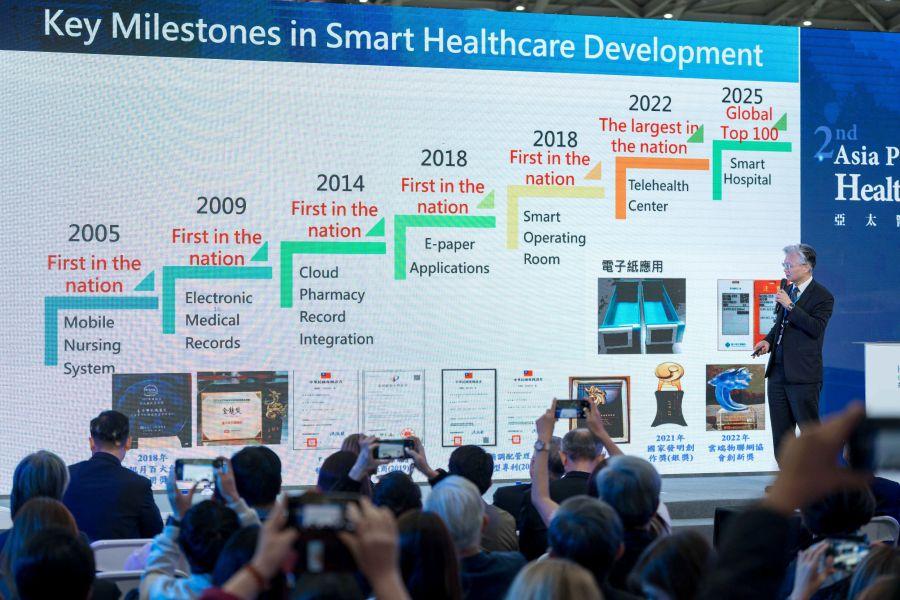
TCVGH has expanded the use of AI, robotics, and telemedicine to improve patient care across central Taiwan. At the forum, TCVGH reviewed two decades of smart healthcare development. Since launching Taiwan’s first mobile nursing system in 2005, TCVGH has built on this foundation and recently ranked among the world’s top Smart Hospitals.
TCVGH has partnered with Tunghai University to develop an AI-based pain level recognition system to accelerate triage and patient flow in emergency departments. The system has achieved an accuracy of 99.9 percent. By analyzing facial expressions, it categorizes patients into three levels—no pain, mild pain, and severe pain—and provides clinical recommendations ranging from continued observation to immediate intervention.
In March 2025, TCVGH and Foxconn introduced “Nurabot,” a nursing robot built to reduce nursing workload by an estimated 30 percent — extending the hospital’s automation strategy beyond emergency care.
Elevating Healthcare Through Global Talent, Local Integration, and “Bilingual Thinking”
Despite swift technological advances, hospitals in Singapore, Japan, and Taiwan agree that the long-term future of healthcare depends on talent development and on organizations' ability to sustain continuous learning.
SGH shifted from a command-based hierarchy to a “team of teams” model emphasizing cross-disciplinary collaboration, transparency, and trust. It intends to cultivate “bilingual thinkers,” professionals fluent in both healthcare and technology. Through pathways like the Clinician Innovator Award (CIA), SGH encourages staff to co-design, test, and implement solutions to everyday clinical challenges.
The University of Tokyo Hospital has identified the training of healthcare professionals as a core mission. With support from Japan’s Ministry of Education under the Advanced Medical Personnel Training Base Formation Project, the hospital offers clinical observerships and hands-on training opportunities for foreign physicians.
As a major medical center in central Taiwan, TCVGH plays a key role in regional healthcare integration and care coordination. The hospital collaborates with 26 healthcare institutions across the Taichung, Changhua, and Nantou regions, providing clinical and operational support, teleconsultation, remote health monitoring, and home-based medical care.
Amid workforce shortages, cost pressures, and an emphasis on patient-focused care, Japan, Singapore, and Taiwan are building future-ready health systems that value safety, efficiency, and responsiveness to patient needs. The process demands rigorous evaluation and a firm focus, bringing the discussion back to the broader challenges hospitals face.