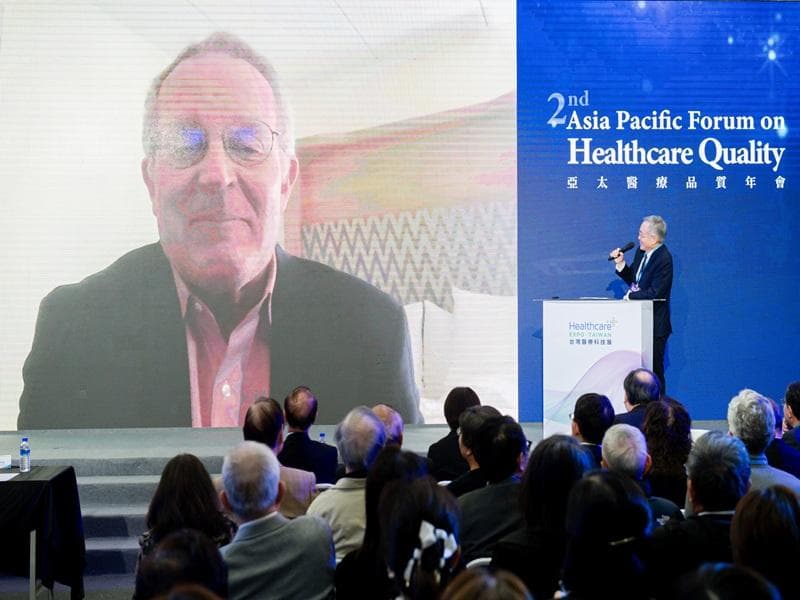
David Bates, professor of medicine at Harvard Medical School and a member of the Newsweek World’s Best Hospitals expert board, delivered a virtual keynote address at the Second Asia-Pacific Healthcare Quality Conference, where he discussed the latest applications and future direction of AI-powered healthcare with medical professionals across the region.
In addition to his role in the global hospital rankings, Bates is a professor at Harvard Medical School and co-director of the Center for Artificial Intelligence and Bioinformatics in the Learning Healthcare System at Mass General Brigham. He is widely recognized as a leading authority on international healthcare quality assessment and the development of smart hospitals.
Healthcare Is Inherently Risky — AI Must Prioritize Safety
Opening his remarks, Bates urged the audience to confront a difficult truth before embracing new technologies in medicine.
“Before we ask what technology can do for healthcare, we first need to recognize how dangerous healthcare itself can be,” he said.
While healthcare is often assumed to be safe, Bates argued that it is, in fact, one of the riskiest complex human activities. He compared medicine with industries such as nuclear power, European rail systems, and commercial aviation, where mortality rates are typically no higher than one death per 100,000 people. By contrast, mortality among hospitalized patients approaches one death per 1,000 cases — a level of risk comparable to activities such as mountain climbing or bungee jumping.
“That’s far beyond what most people realize,” he said. Because healthcare already operates in a high-risk environment, Bates stressed that safety must remain the primary consideration in any AI deployment. Introducing poorly designed technologies into clinical settings, he warned, could unintentionally increase harm rather than reduce it.
Nearly One in Four Hospitalized Patients Experience an Adverse Event
Medical harm does not only appear in the form of mortality. Adverse events — including medical errors, complications, and process failures — can also significantly affect patient outcomes.
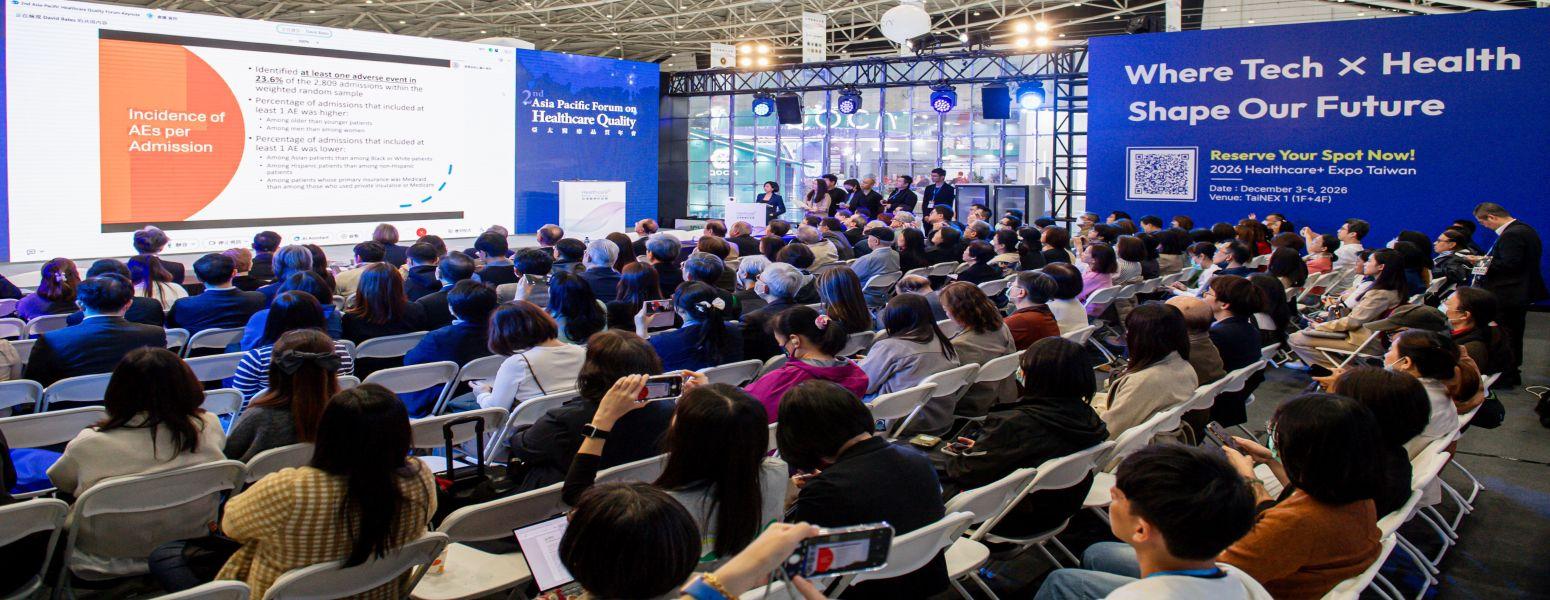
Bates and his research team analyzed 2,809 hospitalized cases in the United States and found that 23.6% involved at least one adverse event. In other words, nearly one in four hospitalized patients experienced some form of medical harm.
The findings, published in The New England Journal of Medicine , also highlighted concerning trends in outpatient care. Approximately 7% of outpatient cases — about one in every 15 patients — involved at least one adverse event.
“These numbers are uncomfortable,” Bates acknowledged. “But if we don’t recognize the problem, we can’t improve it.”
AI’s Greatest Potential: Detecting New Forms of Medical Harm
According to Bates, some of the most common sources of harm in U.S. hospitals include hospital-acquired infections, adverse drug events, deep vein thrombosis and pulmonary embolism, surgical injuries, pressure ulcers, and patient falls.
Healthcare systems across the United States are increasingly adopting AI tools in hopes of reducing these risks more systematically.
“Adverse drug events are one of the areas where AI has particularly strong potential,” Bates said, especially when it comes to identifying high-risk patients before complications occur. Pressure ulcer detection is another promising application, with sensor technologies capable of monitoring subtle changes such as mattress moisture levels to help close gaps in patient care.
Still, Bates believes AI’s most transformative role may lie in addressing “new forms of medical harm,” including undetected patient deterioration or delayed treatment caused by misdiagnosis. These problems can lead to severe consequences yet remain difficult to prevent through conventional methods.
“This is where machine learning can truly add value,” he said.
AI Is Not a Cure-All
Despite AI’s promise, Bates cautioned against viewing it as a universal solution for patient safety.
He pointed to the widely deployed Epic sepsis prediction model in the United States as a cautionary example. Designed to identify life-threatening bloodstream infections early, the system was later found in large-scale evaluations to generate alerts for nearly one in five patients, even though only 12% of flagged patients ultimately developed sepsis.
The high rate of false alarms contributed to “alert fatigue” among clinicians and eroded trust in the system.
Bates emphasized that AI models must undergo local validation and continuous monitoring after deployment.
“Healthcare organizations need to be selective about the AI tools they implement,” he said, “and they must establish mechanisms to ensure these systems are genuinely improving care.”
Three Areas Where Medical AI Is Already Delivering Results
Although AI systems still face accuracy and reliability challenges, Bates identified three areas where the technology is already demonstrating meaningful value: clinical documentation, medical imaging, and electronic clinical quality measures (eCQMs).
AI-powered medical scribes, for example, are increasingly becoming valuable assistants for physicians. Ambient documentation systems can listen during consultations and automatically generate clinical notes in real time.
According to Bates, physicians using these systems have reported burnout reductions of up to 20%.
“Exhausted physicians are more likely to make mistakes,” he noted. “And excessive documentation requirements reduce the amount of time doctors can spend with patients.”
AI is also proving highly effective in medical imaging analysis, particularly in identifying patients at elevated risk of venous thromboembolism. By analyzing imaging studies and clinical reports, AI systems can help physicians identify high-risk groups and make more personalized treatment decisions, including whether anticoagulant therapy is appropriate.
Another emerging application is the development of electronic clinical quality measures, or eCQMs. By leveraging electronic health records and standardized health data, hospitals can track clinical performance in real time and report outcomes more transparently using indicators such as risk-adjusted length of stay and complication rates.
However, Bates acknowledged that implementing eCQMs presents practical challenges. Hospitals may need to redesign workflows or upgrade information systems, while interoperability between different EHR platforms remains a major hurdle.
Well-Designed AI Could Significantly Reduce Human Error
To illustrate AI’s long-term potential, Bates cited autonomous driving company Waymo.
According to company data, Waymo vehicles operating in comparable environments experienced 91% fewer serious accidents and 95% fewer injury-causing crashes than human drivers.
Although healthcare systems are far more complex than transportation networks, Bates believes carefully designed, rigorously evaluated, and continuously monitored AI systems could dramatically reduce human-related risks in medicine as well.
“If every driver in the United States performed as safely as Waymo,” he said, “tens of thousands of injuries and deaths could be prevented every year.”
Overall, Bates expressed cautious optimism about the future of AI in healthcare. But he stressed that successful adoption will require healthcare organizations to pair technological innovation with investments in workforce training, computing infrastructure, and regulatory governance frameworks.
Only then, he argued, can AI deliver its full potential in improving patient care and healthcare safety.
For healthcare leaders, the question is no longer whether AI will enter hospitals, but whether hospitals are prepared to govern it responsibly. Bates urged healthcare organizations to move beyond the hype cycle and focus on building the infrastructure, standards, and accountability needed to ensure AI reduces harm rather than introducing new risks.