AI ECG System Achieves Up to 96% Accuracy in Predicting Cardiac Arrest
Heart disease can claim lives in an instant. In response, a team at Tri-Service General Hospital has developed an AI-assisted electrocardiogram (ECG) system capable of accurately identifying more than 50 cardiovascular conditions.
The system achieves an area under the curve (AUC) of 0.828 to 0.988. Its accuracy in predicting sudden cardiac death reaches 93 to 96 percent, with predictive performance improving as the event draws closer. Comparisons between patients cared for with and without the “AI ECG Guardian” show that use of the system reduces overall mortality by 17 percent and mortality among high-risk patients by 31 percent. When deaths are further categorized, cardiac-related mortality drops by 93 percent, while non-cardiac mortality is reduced by 24 percent.
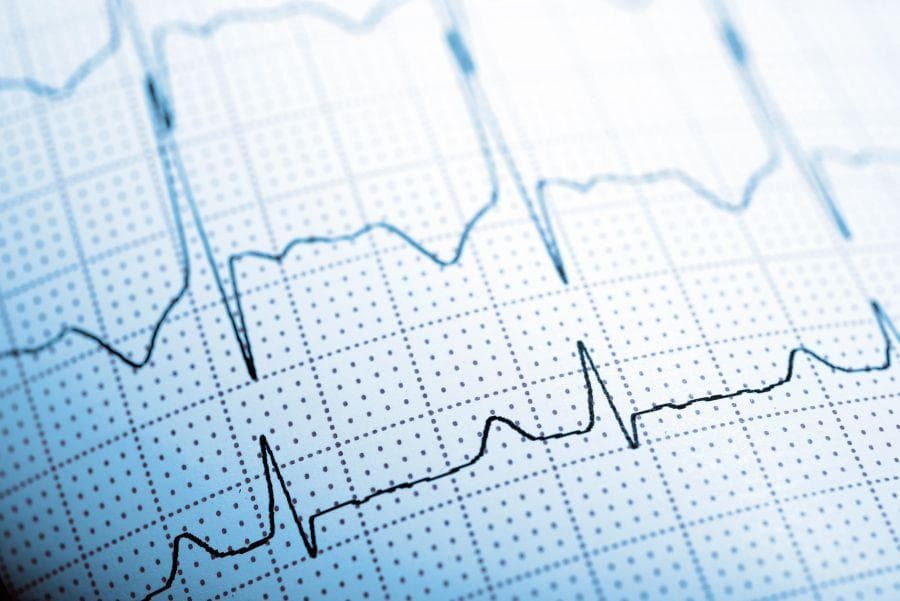
According to Taiwan’s Ministry of Health and Welfare, heart disease has ranked as the country’s second leading cause of death for 11 consecutive years, claiming approximately 23,000 to 46,000 lives annually. ECGs are among the most commonly used diagnostic tools, enabling rapid detection of abnormalities such as structural heart disease, arrhythmias, and myocardial ischemia. Leveraging large volumes of annotated data and advanced deep learning techniques, the Tri-Service team built a comprehensive AI-assisted ECG system for cardiovascular disease detection.
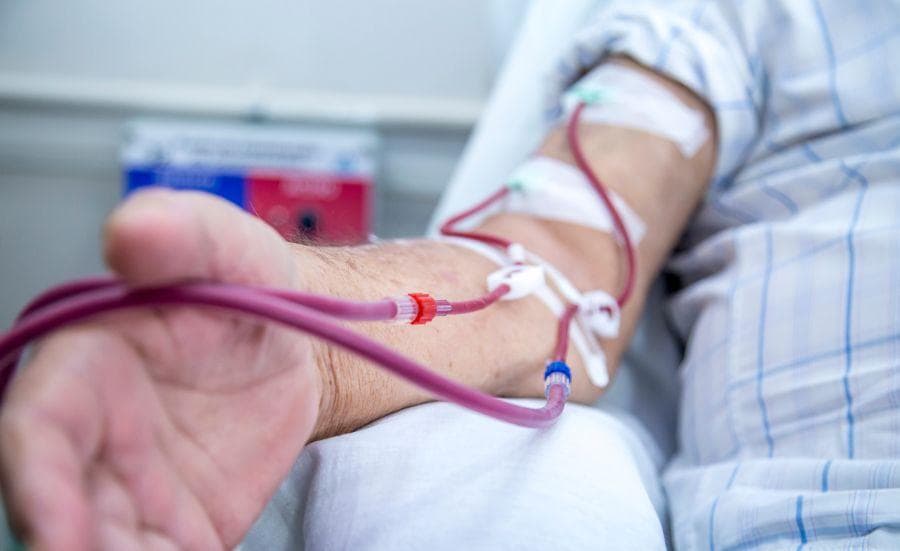
One case involved a 90-year-old woman admitted for dialysis catheter placement. A routine preoperative ECG showed no known history of heart disease. However, through the AI system, Chin-Sheng Lin, Director of the Department of Medical Education at Tri-Service General Hospital, received an immediate mobile alert indicating acute myocardial infarction. Further examination revealed that two of the patient’s three coronary arteries were completely blocked. Emergency catheterization was performed, successfully averting what could have been a fatal heart attack.
Using the case as an example, Lin stressed the importance of the screening tool: “After an ECG is completed, the system can issue a warning that a patient may die within the next few days. This is critically important. If we can identify the problem early and provide treatment, there is still a chance to save the patient.”
AI Models Trained on 100,000 ECG Records to Identify Disease Associations
For Tri-Service General Hospital, the development of the AI-assisted ECG system was far from smooth at the outset. In 2014, Chin-Sheng Lin and his team began investigating how potassium ion levels affect cardiac function and how these changes manifest on ECGs, but progress stalled. A breakthrough came in 2016, when Chin Lin joined as Director of the Core Artificial Intelligence Laboratory.
The hospital had begun digitizing hospital-wide diagnostic data as early as 15 years ago. With this foundational framework already in place, the team was able to gradually complete the remaining pieces of the puzzle.
Chin Lin noted that at most hospitals, ECG machines still output PDF files, or the signals are not fully digitized. By 2015, Tri-Service had already converted about 100,000 ECG records into digital form. ECGs were uploaded immediately after completion. And not only ECGs, most examinations, such as chest X-rays and blood test data, were also digitized.
"By linking these datasets and training AI models, we were able to identify correlations between potassium levels and ECG patterns. The project was finally completed in 2017,” he said.
The team went on to train multiple AI models to uncover relationships between ECG patterns and different diseases. “The greatest value of AI ECG lies in identifying people who appear healthy on the surface but are actually at high risk,” Chin Lin said. “Those are the hidden time bombs.”
The system was first introduced in cardiology in 2020 and later expanded to emergency departments and inpatient wards. Armed with robust data, the team persuaded hospital leadership to promote the system hospital-wide through a top-down approach.
Chin Lin also helped extend its use to rural and underserved areas. For patients with chronic cardiovascular disease, early detection enables treatment that reduces mortality risk. In urgent cases where patients are unaware of their condition, the system facilitates immediate hospital referral.
Research Findings Published in Nature Medicine and Gain Attention from Yale University
The hospital’s performance in AI-assisted ECG applications has earned international recognition, including invitations to present its research at institutions such as Yale University and Mount Sinai.
Comparative clinical trials examining outcomes with and without AI intervention have also been published in the top-tier medical journal Nature Medicine. The findings have been incorporated into guidelines issued by international medical education bodies, and the team is now among the most prolific publishers worldwide in this field.
Looking ahead, Chin-Sheng Lin said, “Our hope is to bring this technology into the home, so more people can benefit from it and more lives—often overlooked but truly at imminent risk—can be saved.”