Greenhouse gas emissions not only drive global climate change but also pose serious threats to human health. Ironically, hospitals, standing on the front line of healthcare, are among the most energy-intensive facilities, with both high electricity consumption and high carbon emissions.
Dalin Tzu Chi Hospital, under the Buddhist Tzu Chi Medical Foundation, has systematically promoted green hospital and health-oriented hospital initiatives, transforming the hospital from a purely medical institution into a healthy and environmentally sustainable organization.
The hospital has now partnered with seven major international organizations, achieved nationwide leadership in nine environmental indicators, reduced its total annual carbon emissions by more than 1,470 tons, and received numerous domestic and international accolades.
Walking into the main lobby of Dalin Tzu Chi Hospital, visitors immediately notice a large rectangular transparent skylight overhead. Covered with a black mesh, it reduces heat from direct sunlight while still allowing bright natural light to flood the space. It lowers the demand for air conditioning and artificial lighting. In addition, the hospital’s exterior walls and rooftop sky garden are densely planted with greenery. Acting as thermal insulation, these green layers prevent heat from transferring directly indoors and further reduce air-conditioning use.
Water Conservation, Energy Efficiency, and Waste Reduction Working Together to Build a Comprehensive “Green Hospital”
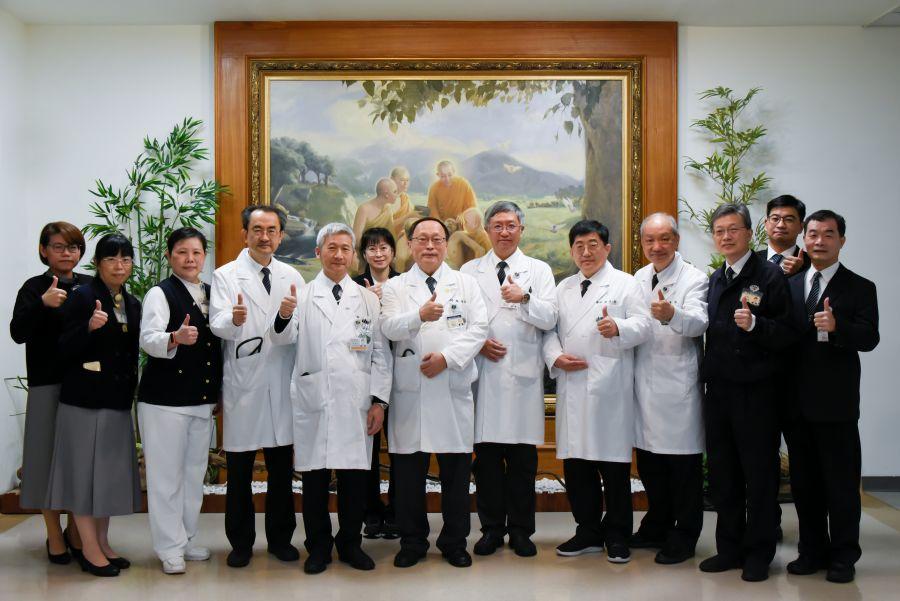
Lin Ming-nan, full title, said that health and the environment are interconnected and that climate change is closely linked to greenhouse gas emissions and brings about problems such as air pollution, threatening public health and increasing the burden on healthcare systems.
The Lancet has long collaborated with leading global academic institutions and experts to and has published the annual Lancet Countdown report, tracking the relationship between climate change and public health. They found out that 2022 report found that over the past two decades, global heat-related deaths increased by two-thirds, underscoring the severe impact of climate change on human health.
To comprehensively achieve the goal of becoming a green hospital, Dalin Tzu Chi Hospital focuses on three key areas: water conservation, energy efficiency, and waste reduction. By integrating hardware and software solutions to minimize environmental impact, the hospital pays close attention even to details that are often overlooked, steadily building its reputation as a green hospital.
Water Conservation
From its inception, Dalin Tzu Chi Hospital installed a wastewater treatment plant and a greywater recycling system. Recycled water is used for toilet flushing and irrigation, reducing tap water consumption by about one-third. Even reverse-osmosis discharge water from hemodialysis is recycled into the greywater system.
In 2020, the hospital recycled 91,466 metric tons of greywater, and in 2021, 94,176 metric tons. Together it reduced carbon emissions by approximately 30,000 kilograms. The use of permeable paving, ecological ponds, and water storage facilities at the Da Ai Farm further reflects the hospital’s commitment to water resource conservation.
Energy Efficiency
Across hospitals in Taiwan, air conditioning typically accounts for around 50 percent of total electricity consumption. To address this, Dalin Tzu Chi Hospital has gradually replaced low-efficiency chillers with magnetic-bearing centrifugal chillers, reducing electricity use by about two-thirds.
Additional measures include installing rooftop solar power systems. Heat pumps are used to supply hot water. Elevators operate under an odd-even floor control system. Timer-controlled drinking fountains with automatic shutoff are installed in public areas. Energy-efficient lighting is adopted throughout the facility. Lighting systems are integrated with natural daylight and time-sensor controls. Monthly electricity consumption analysis reports are produced for review and continuous improvement.
As a result, the hospital has ranked first nationwide in energy use intensity (EUI, annual electricity consumption per unit area) for five consecutive years.
Waste Reduction
Effective resource recycling and reduction of general waste, and even the inclusion of medical waste in recycling systems, represent major challenges in healthcare environmental protection.
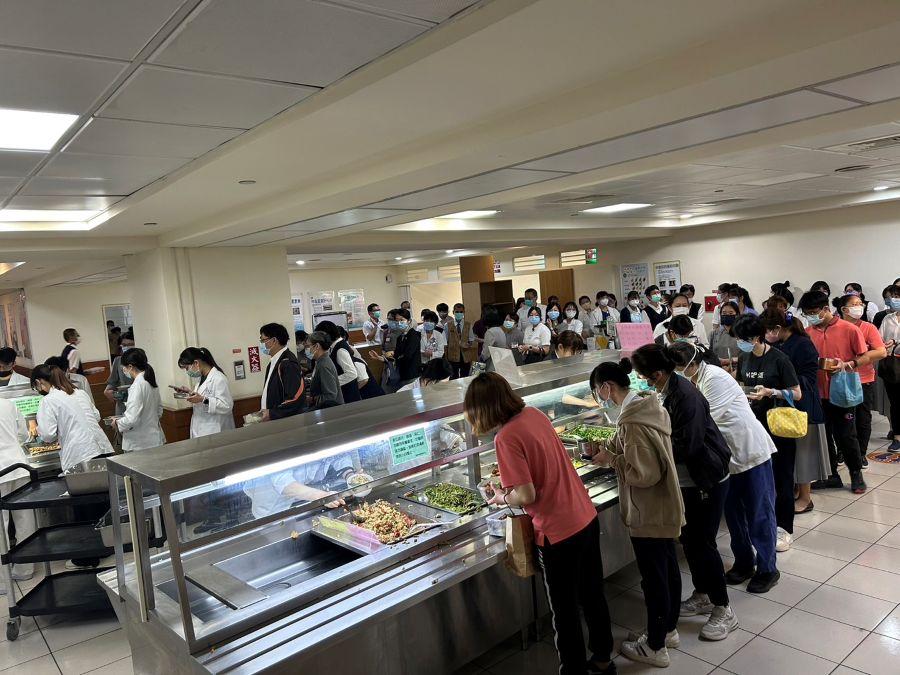
Since its early years, Dalin Tzu Chi Hospital has devoted significant effort to encouraging staff and patients to reduce disposable products and use reusable tableware. Today, all staff use reusable utensils during meals, and inpatients are also provided with reusable tableware.
In March 2019, the hospital became the first in Taiwan to announce it would no longer provide single-use plastic straws, than the government’s July ban. This initiative involved vendors, on-site restaurants and shops, and hospital management. At the same time, the hospital actively promoted waste sorting and recycling, installing nine recycling categories at each nursing station and four major categories in outpatient areas. Through continuous education and advocacy, both staff and patients have developed consistent recycling habits.
To further reduce medical waste, the hospital conducted an internal audit across departments and focused on the three units generating the most medical waste, including operating rooms, laboratories, and dialysis center. By analyzing waste composition, usage, and disposal processes, the hospital explored adjustments that would not compromise medical care.
In the dialysis center, for example, Dalin Tzu Chi Hospital introduced technology that recycles and remanufactures dialysis filters. After a dialysis session, nurses remove the hemodialysis filter, drain blood and wastewater through a dedicated collection funnel, and send the filter for disinfection. The plastic filters can then enter the recycling stream and be processed into plastic pellets at recycling plants.

Dalin Tzu Chi Earned International Recognition as it Received the Climate Leadership Gold by COP21
From quietly cultivating its green hospital vision over 20 years ago to today’s global emphasis on ESG issues, Dalin Tzu Chi Hospital has remained steadfast, earning widespread recognition along the way. Its “green power” has garnered numerous domestic and international awards and attracted healthcare institutions from around the world for visits and exchanges.
At the 2015 United Nations Climate Change Conference (COP21) in Paris, Dalin Tzu Chi Hospital was invited to participate in a high-level roundtable organized by Health Care Without Harm (HCWH). It was the only institution from Taiwan and Asia to receive this invitation, and it won the Climate Leadership Gold Award and Climate Resiliency Silver Award.
In 2022, at the 45th World Hospital Congress in Dubai, Dalin Tzu Chi Hospital received the International Hospital Federation’s Excellence Award for Green Hospitals (Bronze), becoming the first and only hospital in Taiwan to earn this honor.
In 2023, the hospital hosted greenhouse gas inventory tool workshops and a “Race to Zero” summit, becoming the first hospital in Taiwan and Asia to join the Race to Zero initiative.
As the global community moves toward climate mitigation and environmental protection, and embarks on the long journey toward “net-zero emissions by 2050,” Dalin Tzu Chi Hospital has long been charting its own path.
Editor’s note: This article features the Bronze Award winner of the 25th (2022) National Biotechnology and Medical Care Quality Awards in the Medical Institution–Medical Management category. All titles mentioned reflect positions held at the time of the interviews.